

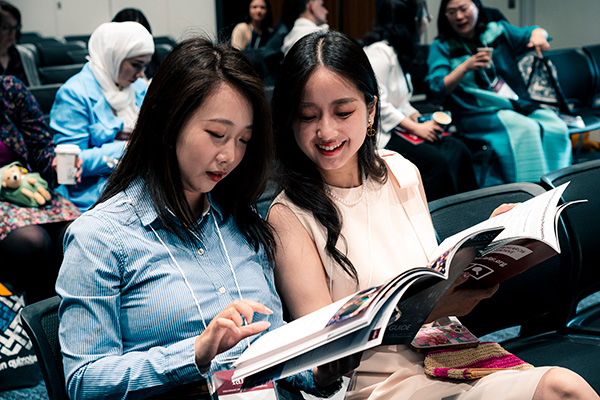
The ACAH/ACCS/ACSS2026 conference held in Tokyo from May 9-13, 2026, gathered 657 attendees from 60 countries and 433 affiliations to discuss how to address challenges that society is facing today. The plenary sessions discussed the issue of an ageing society, employability, innovation, and leadership. They focused on how to equip learners, citizens, and future leaders with the necessary skills to tackle challenges in the 21st century.
Providing design, gerontology, and academic leadership as lenses, two areas arose as important to invest in: the arts and humanities, and interdisciplinarity. The arts and humanities were seen as important contributors to critical thinking, creativity, and leadership, with design specifically having the potential to respond to societal challenges through interdisciplinary collaboration, and the arts and humanities creating more well-rounded leaders, a more productive workforce, and an engaged civil society. Despite their importance, challenges remain in communicating the value of the arts and humanities and interdisciplinary education.
Conference Report and Intelligence Briefing 2026 – Issue 5 – ACAH/ACCS/ACSS2026
Editor: Dr Joseph Haldane
Authors: Dr Melina Neophytou, Ken Camiling & Briar Pelletier
Published: September 11, 2026
ISSN: 2759-4939
In partnership with: The IAFOR Research Centre at the Osaka School of International Public Policy (OSIPP)
Subscribe and Stay Informed
Receive key insights directly to your inbox.
Stay informed of the latest developments in academia.
100% free to read, download and share.
Contents

Introduction and Executive Summary
Written by Dr Melina Neophytou, IAFOR, Japan
In these profoundly uncertain times of runaway technological developments and great conflict, the value of the disciplines concerned with humanity has perhaps never been more important. Through their various methodologies and objects of inquiry, such as art, culture, behaviour, or societal structures, the arts and humanities, the social sciences, and cultural studies provide different interpretations of the same question of what it means to be human. In their essence, the arts are about different forms of human creation, cultural works, and their appreciation; the humanities interpret meaning, values, and histories of the human experience; the social sciences use empirical methods to analyse human behaviour and societies, and cultural studies analyse questions of power and identity. Their greatest strength lies in their ability to frame and condition other disciplines and generate solutions to current challenges facing our planet and societies that individual disciplinary research alone cannot address.
Although most scholars in these fields are accustomed to engaging across disciplines, the institutions in which they operate often place them in particular disciplinary silos, which makes interdisciplinary education and collaboration difficult. ‘One of the core challenges of interdisciplinarity is communication’, IAFOR Chairman & CEO Dr Joseph Haldane said in his opening speech, a statement that participants at the ACAH/ACCS/ACSS2026 conference validated especially during The Forum session (Section 5). ‘It's about communicating what you know to other people, but it's also about asking for help…because, like life, you don't live it alone. You're not a hermit’, he continued while highlighting that conferences, especially interdisciplinary ones, are a great opportunity to form personal and professional relationships and networks that help advance ideas, disciplines, and careers.
One of the main takeaways from this series of conferences is that the arts and humanities, social sciences, cultural studies, and interdisciplinary education and collaboration insufficiently communicate their value to those in power to determine the flow of knowledge, funds, human resources, and policy. Although most are aware of the intrinsic and applied value of the arts and humanities, social sciences, and cultural studies, and the growing need for interdisciplinary collaboration, the arguments for defending these do not always sound clear or convincing to others.

IAFOR Chairman & CEO, Dr Joseph Haldane, delivered the Welcome Address at ACAH/ACCS/ACSS2026
The plenary sessions at ACAH/ACCS/ACSS2026 sought to rectify this communication issue by highlighting the potential of these disciplines to develop well-rounded leaders, a more productive workforce, and an engaged civil society; actors that could help drive forward innovation and provide solutions to the challenges facing societies today. Through the lens of design, gerontology, social engagement, and leadership, keynote speakers and panellists at this conference offered practical examples of how we can communicate the value of disciplines that discuss what it means to be human in a world that is increasingly preoccupied with efficiency, productivity, and tangible outcomes, sometimes at the expense of what gives those achievements meaning.
Professor Miles Pennington from The University of Tokyo, Japan, argued that design’s greatest potential lies in its ability to bring together different forms of knowledge and perspectives to understand and address increasingly complex societal issues. He presented the forthcoming University of Tokyo College of Design as an example of ‘paradisciplinarity’ in higher education through a new programme’s educational model that combines design with engineering, the humanities, and emerging technologies to develop interdisciplinary ‘change makers’ (Section 2).
On the other hand, Professor Katsuya Iijima from The University of Tokyo, Japan, went further by arguing in defence of multi-sectoral cooperation in addressing societal challenges, specifically by demonstrating how Japan’s approach to an ageing society relies on cooperation between communities, volunteers, professionals, and local government. His keynote on community-led frailty prevention highlighted how multi-sectoral collaboration and resident-led initiatives can improve the health, well-being, and social connectedness of older adults (Section 3).
A roundtable on Senior Academic Leadership further strengthened the value of the arts and humanities in cultivating capable and well-rounded leaders. Moderated by Professor Umberto Ansaldo, UNESCO Chair and Dean of the College of Arts Sciences at VinUniversity, Vietnam, Professor Diana Khor, President of Hosei University, Japan, and Professor Yuko Takahashi, President of Tsuda University, Japan, shared their experiences as university presidents and reflected on the challenges of academic leadership, including diversity, mentorship, institutional change, and the importance of building networks and empowering future leaders. Coming from arts and humanities backgrounds themselves, both leaders also demonstrated how these disciplines can cultivate the critical thinking, broad perspectives, and responsible citizenship required for effective university leadership (Section 4).

Participants at the conference also had a chance to share their opinions on the role of the arts and humanities in today’s world, particularly whether they have made a sufficient case to policy-makers, funders, and society as to why they should be supported. The Forum, moderated by Dr Melina Neophytou and Apipol Sae-Tung of IAFOR, Japan, with Professor Dexter Da Silva of Keisen University, Japan as the session’s respondent, saw participants focus particularly on the need for stronger communication between universities, governments, funders, industry, and society, as well as the importance of demonstrating the economic, social, and interdisciplinary value of arts and humanities education (Section 5).
Taken together, the plenary sessions attempted to shed light on the difficulty of conducting interdisciplinary education and research, as well as getting support for the arts and humanities, social sciences, and cultural studies from stakeholders and policy-makers, who often base their priority-setting on immediate, tangible outcomes and return on investment.
2. Design Unbound: Expanding the Frontiers of Design
Written by Briar Pelletier, IAFOR, Japan
Back to Top
A question that has surfaced during our recent conference programmes is how we, as educators and industry professionals, can prepare the next generation for skills that have yet to come. Technology and Artificial Intelligence and Humanity and Human Intelligence, two of IAFOR’s Conference Themes for 2025-2026, have recently been at the centre of this discussion. As artificial intelligence and other emerging technologies reshape the world around us, how are our own capabilities evolving in response? At several IAFOR conferences, the concept of interdisciplinarity has been highlighted as part of the answer to such questions. For Professor Miles Pennington, Professor of Design-Led Innovation at The University of Tokyo, Japan, interdisciplinarity also lies at the heart of his and his institution’s endeavours to redefine and elevate the discipline of design, which raises an important question: what is design, and what can it become?
In his keynote presentation ‘Design Unbound: Expanding the Frontiers of Design’, Professor Pennington spoke on the near future of design and design education, specifically how design has expanded from product-centred practice towards services and systems, and broader social and environmental issues. Referring to his experience in both commercial design and academia, Professor Pennington mapped three broad, chronological stages in the development of design: form design, which centred on products, graphics, and communications; experience design, which expanded into services and interactions; and systems design, which addressed larger-scale transformation. He proposed that design is now entering a fourth stage, one in which it becomes more ‘issue-focused’, addressing questions of how society changes and how people interact with the changing environment.
This evolution is reflected in the changing nature of design education, and for Professor Pennington, interdisciplinarity is key in leading design education into its new age. Traditionally, design education was predominantly disciplinary, with students developing deep expertise in a particular field such as product or graphic design. While such specialist knowledge remains important, Professor Pennington argued that working within a single disciplinary ‘silo’ can limit the ability to engage with more complex challenges.

A significant shift occurred when design education began incorporating other disciplines into its programmes, with Professor Pennington citing engineering as a particular catalyst. He gave the Innovation Design Engineering programme jointly established by Imperial College and the Royal College of Art as an example, a joint effort that began as an experiment asking ‘what would happen if engineers were placed alongside design students in a design studio?’. The resulting graduates were able to bridge design and engineering, combining creative and practical skills with technical understanding. ‘Students would tell us that they learned 50% of the things that they picked up at college from each other. Not from us, the tutors, but from individuals around them. It became a very multidisciplinary programme’, said Professor Pennington. He further explained that the diversity of perspectives created opportunities to approach problems in new ways, resulting in the development of innovative companies and products. Designers, Professor Pennington suggested, can therefore help researchers think more deeply about the wider implications of their work and how these can be communicated to society.
The concept of ‘paradisciplinarity’, an approach that recognises that specialist disciplines contain valuable knowledge rather than attempting to dissolve disciplinary boundaries altogether, forms the foundation of the new, forthcoming University of Tokyo College of Design, which Professor Pennington presented as the next stage in the development of design education. The College is being established with the purpose of enabling ‘meaningful transformation’ and ‘equitable transformation’, bringing together engineering, the humanities, and other fields in a new educational model. Its objective is to develop a new type of graduate: ‘graduates who are intelligent, but they're engaged in a passion to solve social issues… We're trying to create change makers who are interdisciplinary,’ he explained. Scheduled to start in 2027, the proposed programme will combine design education with a broad range of disciplines, from philosophy and Japanese literature to quantum computing and machine learning.
During the Q&A, Professor Umberto Ansaldo of VinUniversity, Vietnam, raised questions around how parents might understand potential career prospects and how the new degree would be accredited and positioned externally. Professor Pennington acknowledged that the programme did not yet have decades of graduates whose careers could demonstrate its potential outcomes. Nevertheless, he argued that this uncertainty was also intentional: the programme does not want to predetermine what its graduates will become.

Professor Pennington acknowledged that there are practical challenges of implementing a paradisciplinary curriculum. He stressed that attracting academics from different disciplines into the same programme does not guarantee interdisciplinary education. If academics continue to teach from the perspective of their own disciplinary silos, students may receive a collection of separate disciplinary courses rather than the programme’s goal of administering a myriad of multidisciplinary concepts. The difficulty of implementing interdisciplinary education was also reflected in a series of Forum discussions that IAFOR dedicated to the topic of how to do interdisciplinarity well at conferences in Paris and London in 2025, which further highlights Professor Pennington’s concerns.
Professor Pennington concluded that design can provide a means of understanding complex situations, developing new ideas, and translating those ideas into action, from the development of products and services to systems and social concerns. As such, it has the potential to promote paradisciplinary education as a way to respond to the growing complexity of the challenges facing society today. As disciplines themselves become increasingly interconnected, and as emerging technologies such as artificial intelligence create new and rapidly changing challenges, the ability to move between different forms of knowledge may become just as important as expertise within any single field.
3. Empowering the Elderly: Japan’s Nationwide Approach to Frailty Prevention and Health Promotion
Written by Ken Camiling, IAFOR, Japan
Back to Top
IAFOR has highlighted shifts occurring within national and international cooperation, pointing to a multi-sectoral and multi-stakeholder cooperation that involves broader social actors. Mounting challenges facing our societies and nations today cannot be solved by individual parties, specific international coalitions, or individual disciplines. One area in which multi-sectoral cooperation between various stakeholders in society has already shown promising positive developments in Japan is the issue of an ageing population. In his keynote presentation titled ‘Community-Led Frailty Prevention in Japan: Empowering Older Adults for Healthy and Active Ageing with Well-being’, Professor Katsuya Iijima, a medical doctor in Geriatric Medicine and Director of the Institute of Gerontology at The University of Tokyo, Japan, showed exactly how such cooperation has led to an improved level of well-being for older adults in Japan.
Professor Iijima opened by noting that around 40% of Japan’s population is aged 60 or older, making it one of the world’s super-aged societies. This may be attributed to the nation’s long life expectancy, which can be linked to healthier lifestyles and more livable environments. These demographic figures bring both opportunities and challenges in sustaining the nation. Professor Iijima prefaced the discussion by sharing that while the world is experiencing a rise in life expectancy, there exists a 10-year gap between its average and ‘healthy life expectancy’. Healthy life expectancy is the number of years an individual can live free from any serious illness or major disability. Given this, Japan has launched two major policies in the past two decades in order to reinforce the nation’s efforts in achieving optimum well-being, or ikigai as popularly known in the country, for its ageing population. Examples of programmes include matching senior citizens to appropriate employment, preventing frailty, institutionalising geron-technology (that is, technology for older adults), and improving the living environment conditions.
Citing examples from different prefectures all over Japan, Professor Iijima shared the structure of the nationwide training system for frailty prevention. He mentioned that the initiative is founded on close collaboration among three parties: volunteer resident supporters, professional trainers, and the local government administration. This is further strengthened and reinforced by an active alliance network of resident-led peer support groups that implement complementary interventions. Among the activities they conduct with the senior citizens are: a) playing e-sports (e.g., Japanese taiko virtual game); b) working with elementary and high schools for mobile workshops; and c) doing mobility exercises. Showing video evidence of how older adults’ physical and mental health improved through these volunteer-led programmes garnered a round of applause from the audience, suggesting a widespread acceptance of such methods and societal cooperation.
Professor Iijima concluded his keynote presentation with invaluable lessons learned from the implementation of the programmes. Firstly, it attests to the successful policy implementation. Secondly, the efforts formed strong bonds among the Japanese, both young and old. And ultimately, the programmes uplifted the spirit of the elderly, as they realised the power of both ‘self-help’ and ‘mutual help’.
4. Senior Academic Leadership: Perspectives on University Leadership in Japan
For those serving in academic leadership roles, as well as those interested in pursuing them, where can they turn for guidance on navigating the challenges these roles yield? What can the experiences of academic leaders in Asia teach us about the challenges and opportunities of senior university leadership? Since its inclusion as part of IAFOR’s capacity-building ongoing programme, the Featured Roundtable Session on ‘Senior Academic Leadership’ has brought together university leaders from the regions in which our conferences are held. For our Tokyo programme, the session featured two university presidents from Japan, Professor Diana Khor of Hosei University and Professor Yuko Takahashi of Tsuda University, whose first-hand experiences of leading Japanese universities brought valuable local perspectives, knowledge, and wisdom to this roundtable discussion on senior academic leadership in the region. The session was moderated by Professor Umberto Ansaldo, UNESCO Chair and Dean of the College of Arts and Sciences at VinUniversity, Vietnam.
A major discussion point during the session was the range of challenges their roles had, and which challenges they perceived as common for those entering leadership positions in Asia. Professor Takahashi has held her position for ten years at Tsuda University, a university that has historically been led by women leaders: ten out of eleven of the university’s presidents have been women. However, she remarked that when engaging with leadership outside of her university, she felt challenged by a lack of diversity: at her first time participating in a President Conference, which gathered Japanese university leaders, there were only two women leaders, including herself, out of 44 participants.
Rather than viewing this only as a challenge, Professor Takahashi described how the experience taught her the importance of advocating for different perspectives as a leader: ‘Above all, even at a presidents’ conference, it’s very important to voice different opinions’, she explained. Through this, she learned a valuable lesson about leadership behaviour: ‘There is significant value in building horizontal connections,’ she said.


Professor Khor, in contrast, has recently entered her second year in leadership. As one of the few women presidents in Hosei University’s history of leadership, and as the first foreign-born president, she openly discussed one major challenge that new leaders in similar situations may also endure: navigating a new leadership role without mentorship. ‘I went into the role of president without training or mentorship… I had lots of ideas, I had vision, but I didn’t know how to get things done’. This transitional period was a significant learning experience for her, especially when she ‘started hitting walls’ when attempting to implement new initiatives within the university. ‘I still hit walls, because you can’t rely on one centre,’ said Professor Khor, ‘and that was the motivation for why I became President’. Developing the practical skills required to turn ideas and vision into action may lead one to ‘hit walls’, but she deemed this an important challenge in understanding how universities operate and in building support.
Looking beyond the immediate challenges of academic leadership, the discussion also considered the responsibility of universities to prepare the next generation to lead through times of disruption. Professor Khor brought up the importance of cultivating responsible citizens and creating university environments where students encounter and learn from a diversity of perspectives. She argued that universities should also look beyond their own institutional interests and collaborate with other institutions to address social challenges on a wider scale. Professor Takahashi followed this by emphasising the importance of encouraging students to speak up and overcome uncertainty, and use their education to make a difference in their university, society, and the world. She pointed to the importance of liberal arts, public policy, reading and writing, and the development of critical thinking as foundations for this responsibility.
The question of how future academic leaders can themselves be prepared was also raised during the Q&A. While Professor Khor acknowledged that she had received little formal preparation for her leadership roles, she emphasised the importance of giving potential leaders opportunities to gain experience through university-wide committees and other responsibilities before they enter top leadership roles. Professor Takahashi agreed, and similarly encouraged emerging women leaders to accept opportunities for advancement rather than dismissing them as ‘not for me’. Both speakers also stressed the continuing importance of mentors and networks. For Professor Khor, one of the most influential moments in her own career came when a former woman president suggested that she could become a university trustee and, later, president. She argued that leadership must also be made ‘imaginable’ to those who might otherwise rule themselves out of consideration.
Both Professor Khor and Professor Takahashi agreed that responsibility for advancing diversity cannot rest solely with those who are underrepresented. Professor Takahashi described the importance of male university presidents who acted as allies during her time in leadership, noting that their support aided in shifting discussions among academic leaders. They also assisted in creating greater participation opportunities for women both active in and interested in leadership roles. Professor Khor also stressed the importance of building networks with male allies, while acknowledging that women must also continue to speak from their own experiences. For both speakers, meaningful change requires both representation and advocacy from those with the institutional power to influence it.
5. The Role of the Arts & Humanities in Troubling Times: Insights from the IAFOR Community
Written by Dr Melina Neophytou, IAFOR, Japan
Professor Pennington’s keynote presentation on design and the arts enhancing students’ skills and improving their employability, as well as leadership skills, discussed during the Senior Academic Leadership session by two university presidents coming from a Humanities background, points to the importance and positive influence of the arts and humanities beyond the classroom. Despite their importance, the arts and humanities keep getting defunded worldwide. The growing trend of arts and humanities faculties either shutting down or not receiving sufficient research funds has been the focus of plenary sessions at several IAFOR conferences in the past year. At the ACAH/ACCS/ACSS2026 conference, IAFOR facilitated an open discussion with our IAFOR community about the role of the arts and humanities in troubling times, in an effort to find actionable ways in which we can defend the arts and humanities.
The Forum session, a one-hour moderated discussion among onsite and online participants at the ACAH/ACCS/ACSS2026 conference, was the first session in a series of three that specifically discussed whether the arts and humanities have made a sufficient case for their importance to policy-makers and funders. This session, titled ‘The Role of the Arts & Humanities in Troubling Times: Part I’, invited Professor Dexter Da Silva, IAFOR’s Vice President and Professor Emeritus of Educational Psychology at Keisen University, Japan, as a respondent, alongside Dr Melina Neophytou, IAFOR’s Academic Operations Manager, and Apipol Sae-Tung, IAFOR’s Academic Coordinator, as moderators.
The main issue highlighted by many discussants was the lack of communication between universities and policy-makers, funders, and society. According to many, the arts and humanities have always made the case for their importance and relevance, but the failure to communicate this to relevant stakeholders lies with universities. This includes communication with key groups, including parents and students. On the other hand, some discussants believed that policy-makers and funders are aware of the importance of the arts and humanities, but consciously choose not to allocate much funding to them due to short-term returns. In both cases, the arts and humanities’ intrinsic value and the economic and productive value generated by arts and humanities education seem to be poorly communicated to policy-makers, funders, and society.
I think it is ridiculous that we have to be asking these questions. I believe that much of what we know about research on human existence stems from the arts and humanities, from philosophy, psychology, and literature.
Communication is essential… How do we translate knowledge to the general public? For example, how do we translate AI to normal people? We need people to understand that there should be a kind of human-AI interaction. So where does the human part come from? From the social sciences and from the arts and humanities. And so if we are asking whether the arts and humanities made a sufficient case for themselves, I think that our very existence is enough of a case to show that we deserve to be funded.
- A delegate from Nigeria
I think it is very naive of us to think that the ones who are making the decisions up there are aware of these interrelations, about these interdependencies. I don't think there is a lack of a sufficient case.
The issue is the lack of that case being communicated in a way that's tangible for the decision-makers. Sometimes the government has to prioritise its decisions, and those priorities are sometimes driven by economic matters. Typically, the arts and humanities don't really give you a tangible result that they’ve come to, which governments may be asking for. So I think the case exists, but the case which needs to be communicated is where the bridge needs to be built. So the question might be reframed. There is a sufficient case, but how do we communicate it?
- A delegate from the United Arab Emirates (in response)

Professor Dexter Da Silva served as respondent for The Forum at ACAH/ACCS/ACSS2026
Offering several opinions on how to best communicate with policy-makers, industry, and funders, participants focused on identifying who the stakeholders are, clearly defining the desired outcome for all parties, and alluding to the economic and productive value of arts and humanities education.
The case hasn't been made by universities, but when you look at studies, the United Kingdom has had a 10-year longitudinal study of the income of arts and humanities graduates after graduation, which shows that they are second only to business and marketing students and that five years from there, they top STEM students. When you talk to Asia Pacific-wide recruiters, they will tell you that what they are looking for right now is primarily soft and critical skills, especially in the age of AI. So, the case has been made; it's that governments don't particularly like what comes out of arts and humanities, so it is indeed a political issue more than an issue of whether the arts and humanities themselves have shown value.
From the point of view of society, it becomes a little bit more complicated. For students and their parents, the prime reason to study is to have an income. If we, in our programmes, can't make the case that what we are teaching them will lead to a good income, then we are in trouble.
- A delegate from Italy working in Vietnam
One of the challenges is how to respond to government directives and also demands. Government gets information from the private sector and then passes it to the university, and it's kind of one-way traffic. One of the things that needs to be done is to have communication, as you said, as two-way traffic, with not only the government, but also with the corporate world and industry.
- Diana Khor, President of Hosei University, Japan
We are talking a lot about convincing someone, either the government or sometimes the donor or the funder. It's one of those questions that I really hate.
I am working with the community. Why do I need to convince anyone? I want to rephrase this question and say, what progress are you looking at? One gentleman previously said that sometimes the government's focus is on getting tangible outcomes faster. But how many times have you got anything tangible, or something that had a wide impact, when doing a pilot study for six months? Most of the time, even a three-year intervention on the ground does not give the expected impact. Progress takes time.
What is the progress you want? That is what the question should be. The timeline is very important: what are you aiming for, and for whom is something that we really need to think about as researchers.
- A delegate from India
When you mentioned the issue about time, I think all of us might have experienced the problem with funders wanting impact evaluation. You said six months is not enough, eight months is not enough, a year is not enough, and then it made me think, maybe it's the hard sciences that are proving that we are necessary. Every time the hard sciences publish a statistic that says this is the failure rate, that's when they come to us for needs assessment. How do the arts and humanities remind us what it means to be human? People can come up with numbers and machines and technologies, but is it sustainable? The only ones who can answer whether it's sustainable are humans.
- A delegate from South Africa (in response)

In response to the clear definition of goals by policy-makers and funders, a participant further noted that these goals may change with every successive government.
Governments are not static. They're always changing. So with every party that's ruling, there will be different initiatives and different measures. I think the best way to prove and show how important arts and humanities are is for us to go into politics. We mostly get stuck in graduate schools and our fields, but it's important to move outside of the field where we want to be heard. So, I think the question is not how we will prove it to someone, but how we can become the ones who will listen to others.
- A delegate from South Korea
Finally, a participant provided the concept of interdisciplinarity as a powerful argument that could convince policy-makers, funders, and society of the arts and humanities’ value.
I wonder whether perhaps, as researchers, we've been conditioned to see the arts and humanities as separate from these other things. I don't think these are necessarily separate things. All of our research, even empirical research, even economics itself, is inevitably in some ways creative. They require critical thinking. I think our job ought to be proving the value of that within everything that we do… So I think that maybe this question is imposing a little bit of a dichotomy, where maybe we ought to be thinking about how we can show how interconnected disciplines are. And maybe that goes back to the whole theme of the conference.
- A delegate from the United States working in Japan
Interestingly, collaboration with the hard sciences is something that was picked up and heavily discussed in the second part of this Forum series during the Paris Conference on Education (PCE2026) and Arts & Humanities (PCAH2026), where participants discussed concrete arguments that could convince policy-makers, funders, and society to allocate more resources to the arts and humanities (report forthcoming).
While communication between government, industry, society, and academia surfaced as the most impactful way of defending the arts and humanities, interdisciplinary communication and collaboration seem to underpin such communication. However, the ‘interdisciplinary’, one of IAFOR’s three watchwords, is not always easy to engage with. This was evidenced at IAFOR’s two-part Forum sessions on ‘Cooperating in Difficult Times: Global Citizenship and Interdisciplinarity’ held in 2025 at the PCE/PCAH2025 and ECE/ECAH/EGen2025 conferences, which focused on how to do interdisciplinary research and collaboration well. Participants there voiced multiple challenges in engaging in interdisciplinary collaboration and research, with many identifying the lack of funding for such research.
IAFOR is committed to engaging with the academic community in an interdisciplinary way, a commitment that is evident in the way it conducts not only conferences, but also various research projects through the IAFOR Research Centre (IRC), as well as financially supporting early-career scholars with interdisciplinary research projects.

6. Conclusion
Written by Dr Melina Neophytou, IAFOR, Japan
The Tokyo Summer Conference series brought together scholars from the arts and humanities, the social sciences, and cultural studies in a true celebration of the international, the intercultural, and most importantly, the interdisciplinary. The conference itself highlighted the importance and potential of interdisciplinary collaboration to address challenges our societies are facing today in an increasingly conflict-ridden and technologically transformative world. Through the lens of design, a discipline that has transformed over the years to be understood as an interdisciplinary area of inquiry, the issue of an ageing society, and academic leadership, the plenary sessions offered practical examples of how the arts and humanities, the social sciences, and cultural studies have come up with innovative solutions to societal challenges through interdisciplinary research and collaboration.
At a time when these disciplines and their faculties worldwide are being defunded and partially shut down, the plenary sessions at this conference went against the tide, defending these disciplines through concrete examples and convincing arguments of what these disciplines can accomplish when supported and remaining open to interdisciplinary inquiry and collaboration. At best, these disciplines can enrich those sectors of society that are responsible for societal well-being: a more productive workforce, an engaged civil society, and strong leadership at the top.
At the same time, the conference highlighted the difficulty in conducting interdisciplinary research and engaging with the arts and humanities, social sciences, and cultural studies, which do not often appeal to decision-makers. Their contribution to society is often harder to articulate in terms of immediate, tangible outcomes, despite the examples presented throughout the conference. This makes it harder for policy-makers, governments, funding bodies, the hard sciences, and society at large to support these disciplines in the face of challenges that need to be dealt with immediately. Conference participants pointed to the necessity of improving communication between relevant stakeholders, creating more convincing arguments regarding the value of disciplines concerned with understanding and interpreting humanity, and demonstrating what these disciplines can do in practice. Rather than defending these disciplines in isolation, the discussions concluded that the strength of these disciplines lies in their ability to connect with various sectors in society and contribute to problems that cannot be addressed by one discipline alone.
Following these conclusions, IAFOR’s next conference in Paris (report forthcoming) looked at how we can reimagine education and the arts and humanities to place the human back at the centre of academic inquiry, and what arguments would best convince those in power to keep supporting disciplines that examine what it means to be human.


7. Cultural Programme & Networking
Written by Briar Pelletier, IAFOR, Japan
7.1. Karate Demonstration
Due to their popularity during the Tokyo Spring conference series, IAFOR invited the Waseda University Karate Club once again to the Tokyo International Forum main stage to lead delegates through a live Karate Demonstration, featuring key instruction on this traditional Japanese martial art. During the demonstration, karate practitioners Iwabuchi, Ohara, and Nishizuka introduced a variety of katas, detailed movement patterns or ‘drills’ which are essential in conducting karate training. Their demonstrated patterns included taikyoku shodan, an introductory kata which teaches basic stances and involves centre-punching, as well as a variety of kicks and punches including board-striking.
The demonstration also included a participatory element, where volunteers from the audience were asked to test their own striking skills and attempt to break a wooden board using the appropriate kata. The selected volunteers were able to join the Karate Club on stage and learn the katas directly alongside them, with some even striking some boards themselves while being cheered by their peers in the audience.


7.2. Haiku Workshop
The Tokyo Summer programme also featured a Haiku Workshop titled ‘What is Haiku?’ during the conference’s first parallel day, where delegates could learn about and construct their own haiku, a traditional short-form Japanese poem, with the guidance of professional haiku instructors. Led by Emiko Miyashita and Kyoko Uchimura, practising members of the Haiku International Association, Japan, delegates were able to learn about the traditions and global practice of haiku, including haiku as an international phenomenon hybridised via the infusion of many languages and literary techniques.
Haiku has been adopted by many well-known international poets, including Jack Kerouac and Marlene Mountain among others, and the workshop discussed the unique styles these international poets contributed to the art form. The instructors emphasised that haiku, while a Japanese tradition, is practised widely around the world today, and has evolved accordingly due to these international and intercultural contributions. The workshop also featured instruction on how to evaluate a haiku, specifically for its technical mastery and its emotional impact. Miyashita-sensei and Uchimura-sensei then guided participants in creating their own haiku, developing and presenting their work with fellow IAFOR delegates.

7.3. Flash Presentations
One of the most common questions delegates ask during conferences is how they can advertise their presentations to further their engagement with other delegates during the conference. Flash Presentations were introduced to our programme as a way to make such introductions more accessible, casual, and fun, allowing delegates a second chance to present, to meet and engage with other presenters, and invite further conversation during and after the conference.
The Flash Presentations session offered an opportunity for delegates to share and engage with research taking place across the conference that they may otherwise have missed. Delegates who joined the session were tasked with matching with a delegate they had yet to engage with at the conference, introducing themselves, and sharing their research with them in a social style the room started to refer to as ‘speed research’. After each round, delegates were switched and paired with others, allowing them to warm up to more casual ways of sharing their research, helping them practise introducing the core idea quickly, as well as share what makes it interesting to their new connections. Once participants became more accustomed to the quick style and became more well-connected with each other, each participant was given the stage to present their work to their newfound audience in 60 seconds.
The session was a hit, with participants exchanging information with new contacts and forming new connections. It brought those working across different disciplines, countries, institutions, and perspectives together through friendly, lightning-round style presentations, allowing them to form new connections they may have previously missed during the conference programme.


7.4. Welcome Reception
The Welcome Reception closed out the first plenary day, allowing delegates the opportunity to raise a glass to the plenary programme’s keynote speakers, meet fellow delegates, and continue conversations from the day’s sessions. In Tokyo, the reception was held alongside the Conference Poster Session, which allowed poster presenters a more vibrant networking and engagement space to present their research and engage with a larger audience. The Welcome Reception is always a free event open to everyone registered for the conference, and is designed as a space where delegates at all levels of their careers can form long-lasting connections within the IAFOR network.


7.5. Conference Dinner
Once the Welcome Reception closed off the first plenary day at the Tokyo International Forum, the Conference Dinner was held at Shunju Tameikesanno, now a culinary staple within the Tokyo Summer Conference Series’ programme. For more than two years, Shunju Tameikesanno has welcomed ACAH/ACCS/ACSS2026 delegates with its seasonally-inspired Japanese course menu, offering a variety of flavours that correspond to local, in-season produce. The Conference Dinner remains a significant part of our networking programme, as it allows plenary speakers, the IAFOR Academic Board, and delegates a chance to unwind, relax, and get better acquainted after a full day of plenary presentations.
Subscribe and Stay Informed
Receive key insights directly to your inbox.
Stay informed of the latest developments in academia.
100% free to read, download and share.
Key Statistics

Delegate World Map & Country Breakdown

Total Number of Attendees: 657
Total Number of Countries Represented: 60
| Country | Count |
|---|---|
| Taiwan | 108 |
| Thailand | 54 |
| United States | 54 |
| Philippines | 50 |
| Indonesia | 46 |
| Hong Kong | 45 |
| India | 43 |
| China | 20 |
| Japan | 19 |
| United Kingdom | 18 |
| Canada | 15 |
| Malaysia | 15 |
| Germany | 13 |
| South Korea | 12 |
| United Arab Emirates | 10 |
| Australia | 9 |
| Singapore | 9 |
| Vietnam | 8 |
| South Africa | 7 |
| Türkiye | 7 |
| Serbia | 6 |
| Israel | 5 |
| Slovakia | 5 |
| Italy | 4 |
| Kazakhstan | 4 |
| Mongolia | 4 |
| New Zealand | 4 |
| Poland | 4 |
| Romania | 4 |
| Brazil | 3 |
| Country | Count |
|---|---|
| France | 3 |
| Mexico | 3 |
| Saudi Arabia | 3 |
| Sri Lanka | 3 |
| Switzerland | 3 |
| Uzbekistan | 3 |
| Austria | 2 |
| Bangladesh | 2 |
| Belgium | 2 |
| Croatia | 2 |
| Czech Republic | 2 |
| Denmark | 2 |
| Iceland | 2 |
| Lithuania | 2 |
| Netherlands | 2 |
| Portugal | 2 |
| Brunei | 1 |
| Bulgaria | 1 |
| Cambodia | 1 |
| Finland | 1 |
| Greece | 1 |
| Ireland | 1 |
| Kuwait | 1 |
| Latvia | 1 |
| Oman | 1 |
| Pakistan | 1 |
| Peru | 1 |
| Russia | 1 |
| Spain | 1 |
| Ukraine | 1 |
Subscribe and Stay Informed
Receive key insights directly to your inbox.
Stay informed of the latest developments in academia.
100% free to read, download and share.
